


Educational Resources for the Research Community
Welcome to the Recherche Logistique Research Knowledge Center.
The Research Knowledge Center is your trusted source for educational information about research peptides, laboratory quality standards, and scientific best practices. Whether you’re new to research or looking to deepen your understanding, our goal is to provide clear, accurate, and easy-to-understand resources based on accepted laboratory principles.
Our articles explore topics including research peptides, Certificates of Analysis (COAs), third-party laboratory testing, lyophilization, proper storage and handling, and other quality practices that help researchers better understand the materials they work with. Every guide is written to explain complex concepts in straightforward language while emphasizing transparency, documentation, and scientific integrity.
As our library continues to grow, you’ll find practical educational resources designed to help you interpret laboratory documentation, understand analytical testing, and learn the standards commonly used throughout the research community. Whether you’re reviewing a Certificate of Analysis, learning how lyophilized peptides should be stored, or exploring why third-party testing matters, our Knowledge Center is designed to provide reliable information in one convenient place.
Researchers interested in exploring peer-reviewed scientific literature can also browse the PubMed database maintained by the U.S. National Library of Medicine.
Browse the articles below to expand your knowledge of research peptides, laboratory verification, and research quality practices. New educational resources are added regularly as we continue to build one of Canada’s most comprehensive peptide research knowledge libraries.
Looking for laboratory research materials? Browse our research peptides in Canada supplied with independent testing and batch-specific COA documentation where available.
Need to work out volumes for your research vial? Try our free peptide calculator.

Retatrutide vs. Tirzepatide: Comparing Two Leading GLP Research Peptides
Read more: Retatrutide vs. Tirzepatide: Comparing Two Leading GLP Research PeptidesIntroductionRetatrutide and Tirzepatide are two of the most closely watched compounds in current metabolic research. Both are being studied for their effects on glucose regulation and body weight in preclinical and clinical models, but they differ in receptor targeting, molecular structure, and the stage of research each has reached. This article compares the two for researchers evaluating which compound fits their study design. Mechanism of Action Research StageTirzepatide has a longer research and clinical trial history, with a larger body of published pharmacokinetic and efficacy data. Retatrutide is newer to the research landscape, with a growing but comparatively smaller set…
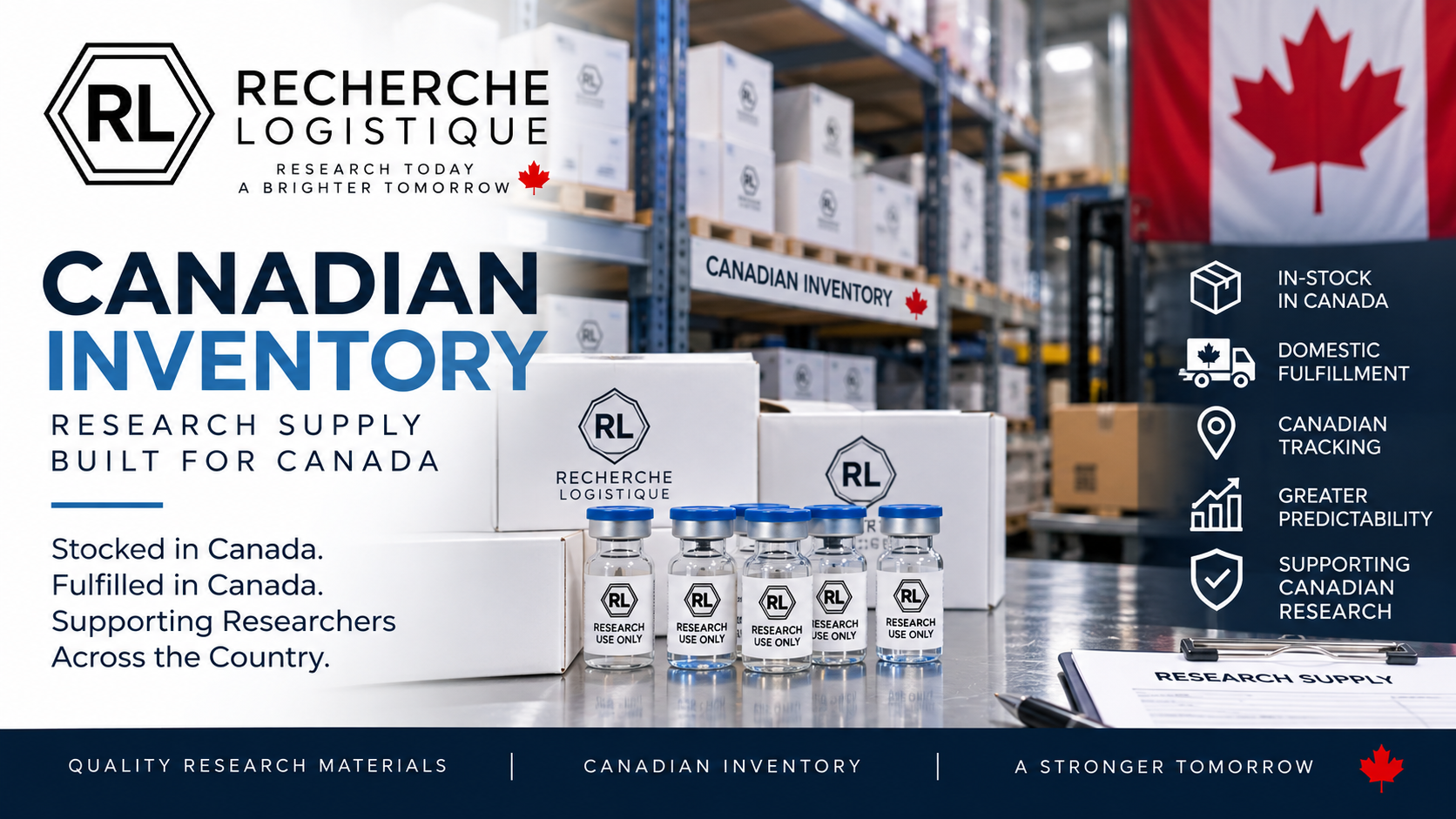
Why Canadian Inventory Matters When Choosing a Research Peptide Supplier
Read more: Why Canadian Inventory Matters When Choosing a Research Peptide SupplierWhen researchers evaluate a supplier, the location of the supplier’s inventory can be just as important as where the business itself is located. A company may operate in Canada, but that does not necessarily tell a customer where the research material is physically located when an order is placed. For Canadian researchers, there can be a meaningful logistical difference between ordering material that is already stocked in Canada and ordering material that still needs to enter Canada before the customer’s order can be fulfilled. At Recherche Logistique, our approach is to maintain research inventory in Canada so available products can…
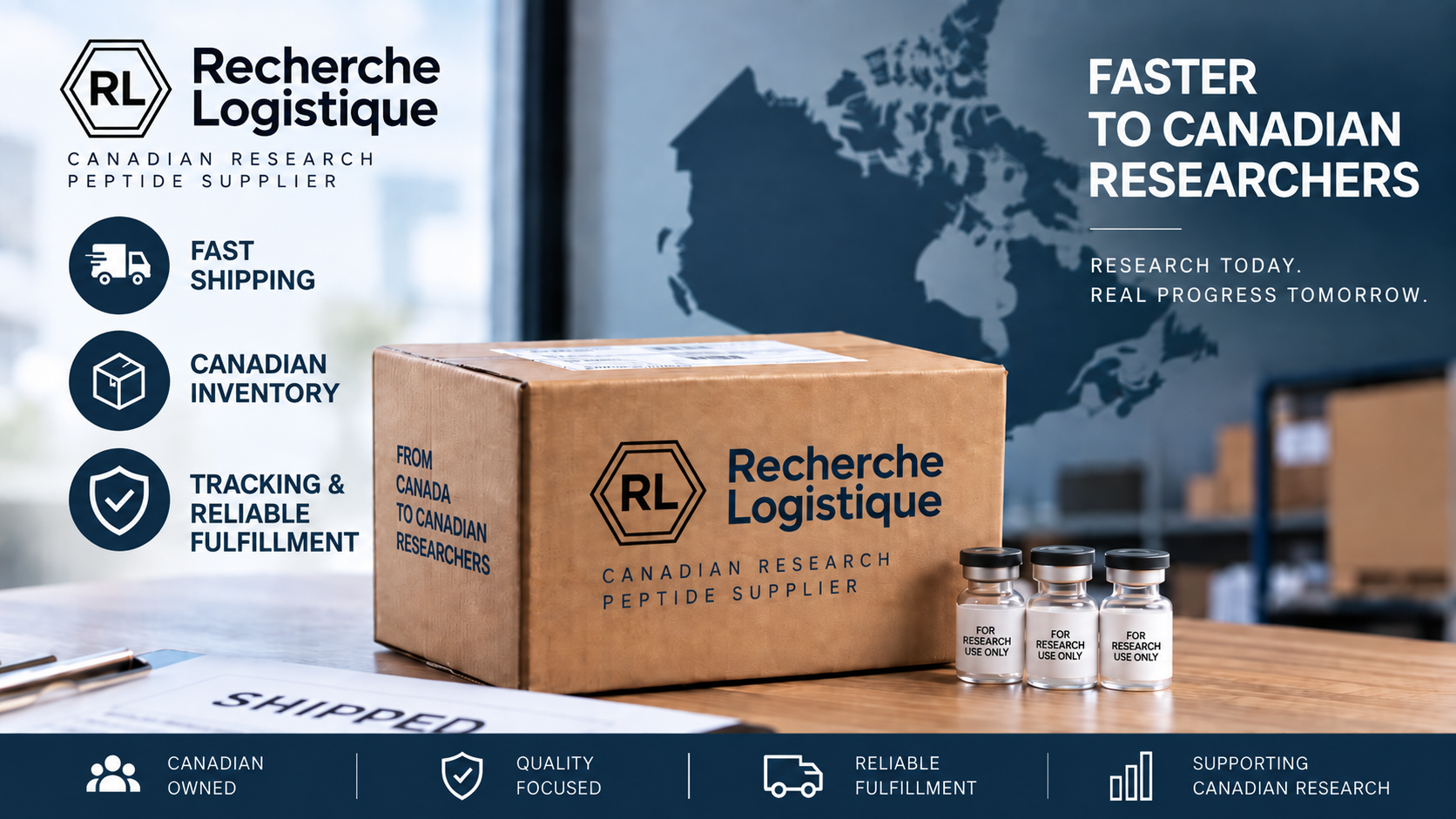
Why Shipping Speed Matters When Choosing a Canadian Research Peptide Supplier
Read more: Why Shipping Speed Matters When Choosing a Canadian Research Peptide SupplierFast Shipping Is More Than a Convenience in Research Supply When Canadian researchers choose a research peptide supplier, product selection and price are only part of the decision. Documentation, independent testing, inventory location and fulfillment can be just as important. One factor that is sometimes overlooked is shipping speed. A supplier may have the required research material listed on its website, but if an order takes days to process or must travel through an international supply chain before reaching Canada, the actual procurement timeline can be considerably longer. For researchers sourcing materials in Canada, choosing a Canadian research peptide supplier…

How to Choose a Canadian Research Peptide Supplier
Read more: How to Choose a Canadian Research Peptide SupplierChoosing a Canadian Research Peptide Supplier Recherche Logistique is a Canadian, veteran-owned supplier of research peptides serving researchers across Canada. Choosing a Canadian research peptide supplier involves more than comparing product names or prices. Researchers should look for transparent batch-specific testing, accessible Certificates of Analysis, clear research-use policies, reliable Canadian shipping, and consistent product information. The Canadian research peptide market has grown considerably, giving laboratories and independent researchers more supplier options than ever before. That also makes it more important to evaluate how a supplier operates rather than relying only on marketing claims. What to Look for in a Canadian…
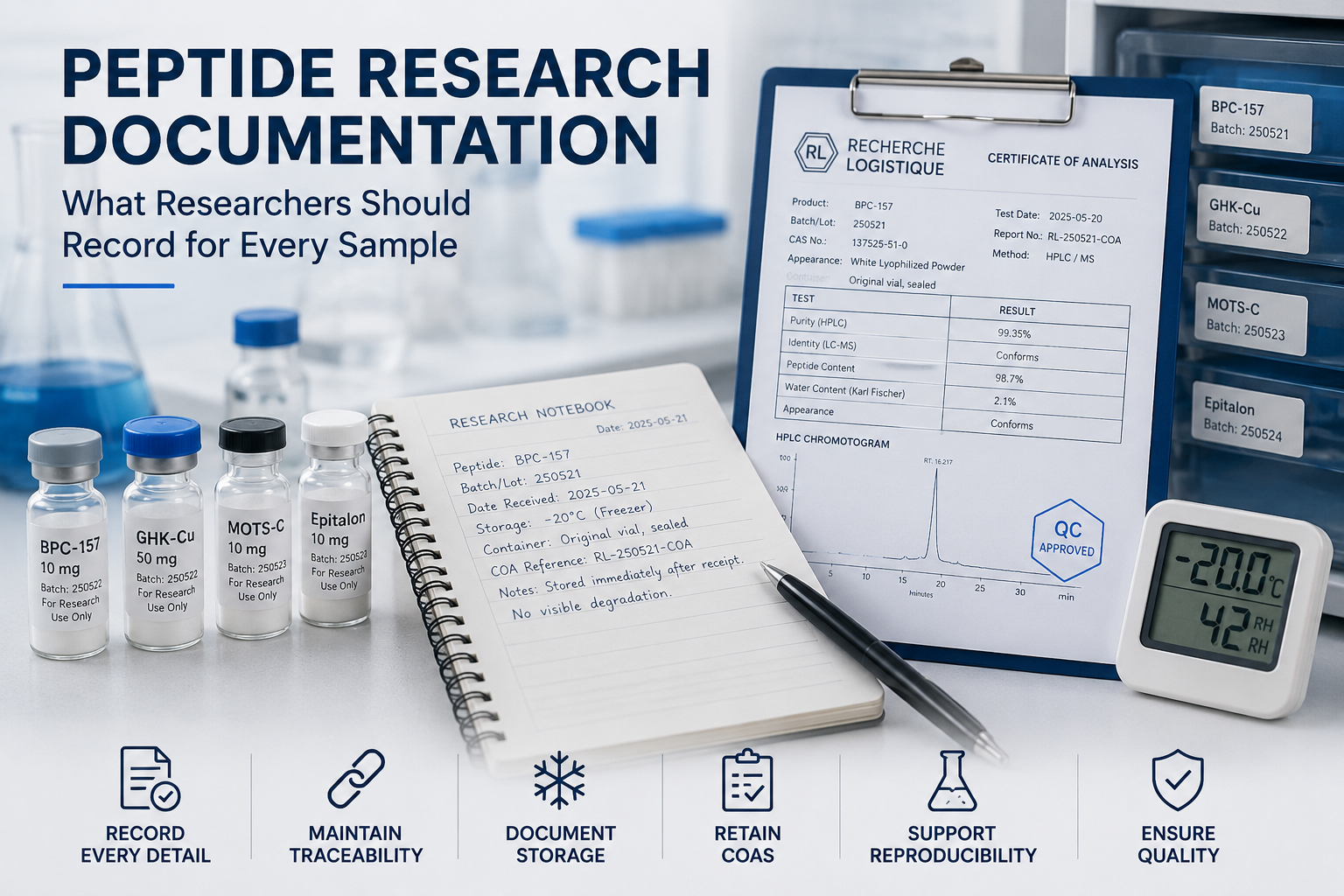
Peptide Research Documentation: What Researchers Should Record for Every Sample
Read more: Peptide Research Documentation: What Researchers Should Record for Every SampleAccurate documentation is an essential part of laboratory research. When working with research peptides, maintaining clear records for each sample helps preserve traceability, supports reproducibility, and ensures that analytical documentation can be connected to the correct material. A Certificate of Analysis provides valuable information about a tested batch, but a COA is only one part of good research documentation. Researchers should also maintain their own records identifying the sample, its source, storage conditions, and any relevant handling history. Here are some of the key pieces of information worth documenting for every research peptide sample. 1. Product and Peptide Identification Every…

HPLC vs. Mass Spectrometry: How Research Peptides Are Tested
Read more: HPLC vs. Mass Spectrometry: How Research Peptides Are TestedLearn how HPLC and mass spectrometry are used to evaluate research peptide purity and identity, and why both methods matter when reviewing laboratory testing and Certificates of Analysis.

How to Verify a Peptide Certificate of Analysis (COA) in Canada
Read more: How to Verify a Peptide Certificate of Analysis (COA) in CanadaLearn how to verify a peptide Certificate of Analysis (COA) in Canada, including batch matching, third-party laboratory verification, purity, identity testing, and peptide content.
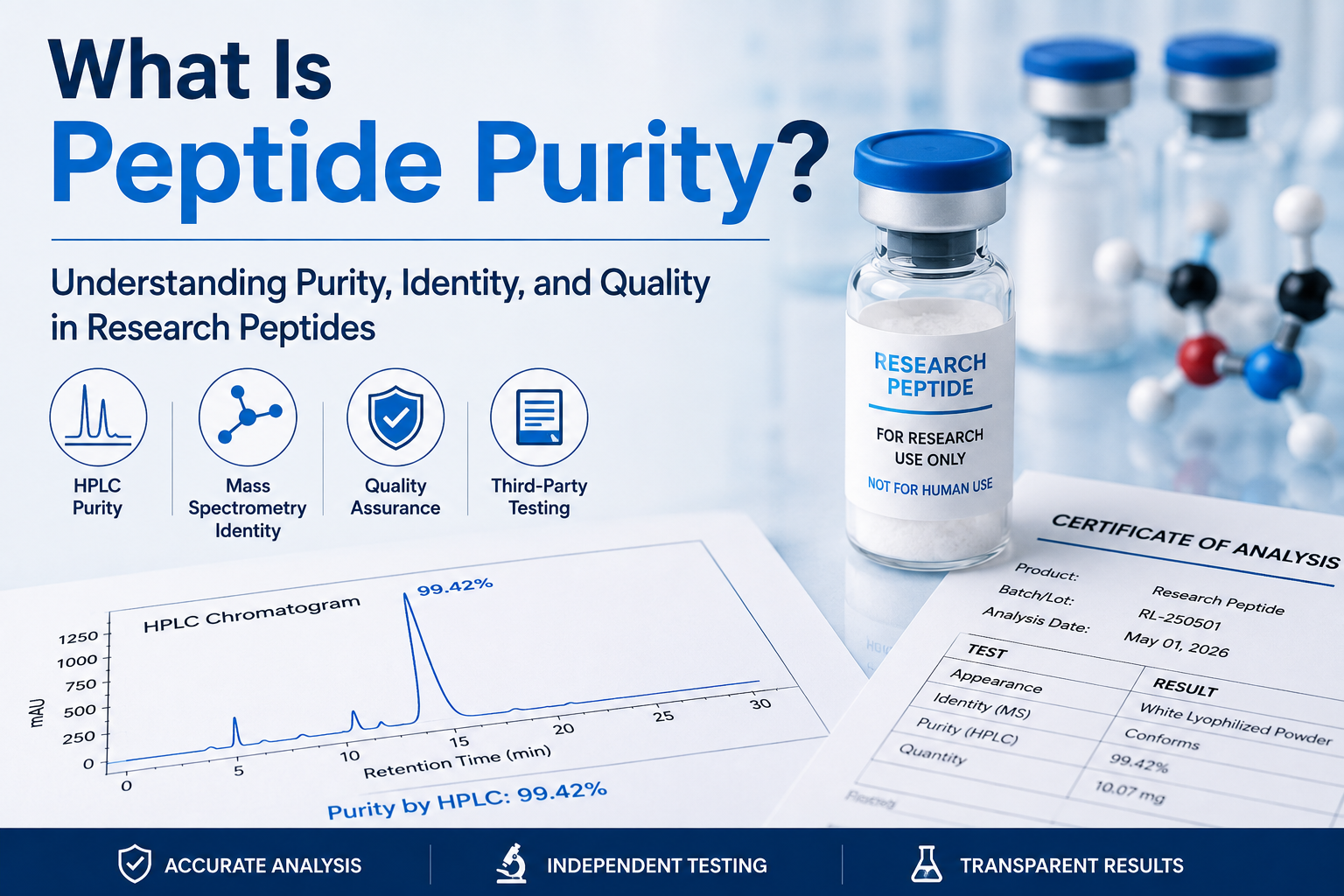
What Is Peptide Purity? Understanding Purity, Identity, and Quality in Research Peptides
Read more: What Is Peptide Purity? Understanding Purity, Identity, and Quality in Research PeptidesWhen evaluating research peptides, one of the most common specifications researchers encounter is purity. Product listings and Certificates of Analysis (COAs) may report values such as 98%, 99%, or higher, but understanding what those numbers actually represent is important when evaluating research materials. Purity is only one part of assessing a peptide. Identity, quantity, analytical methodology, batch information, and independent laboratory verification can all provide additional information about the material being evaluated. In this article, we explain what peptide purity means, how laboratories commonly evaluate it, and why researchers should look beyond a single percentage when reviewing analytical results. What…
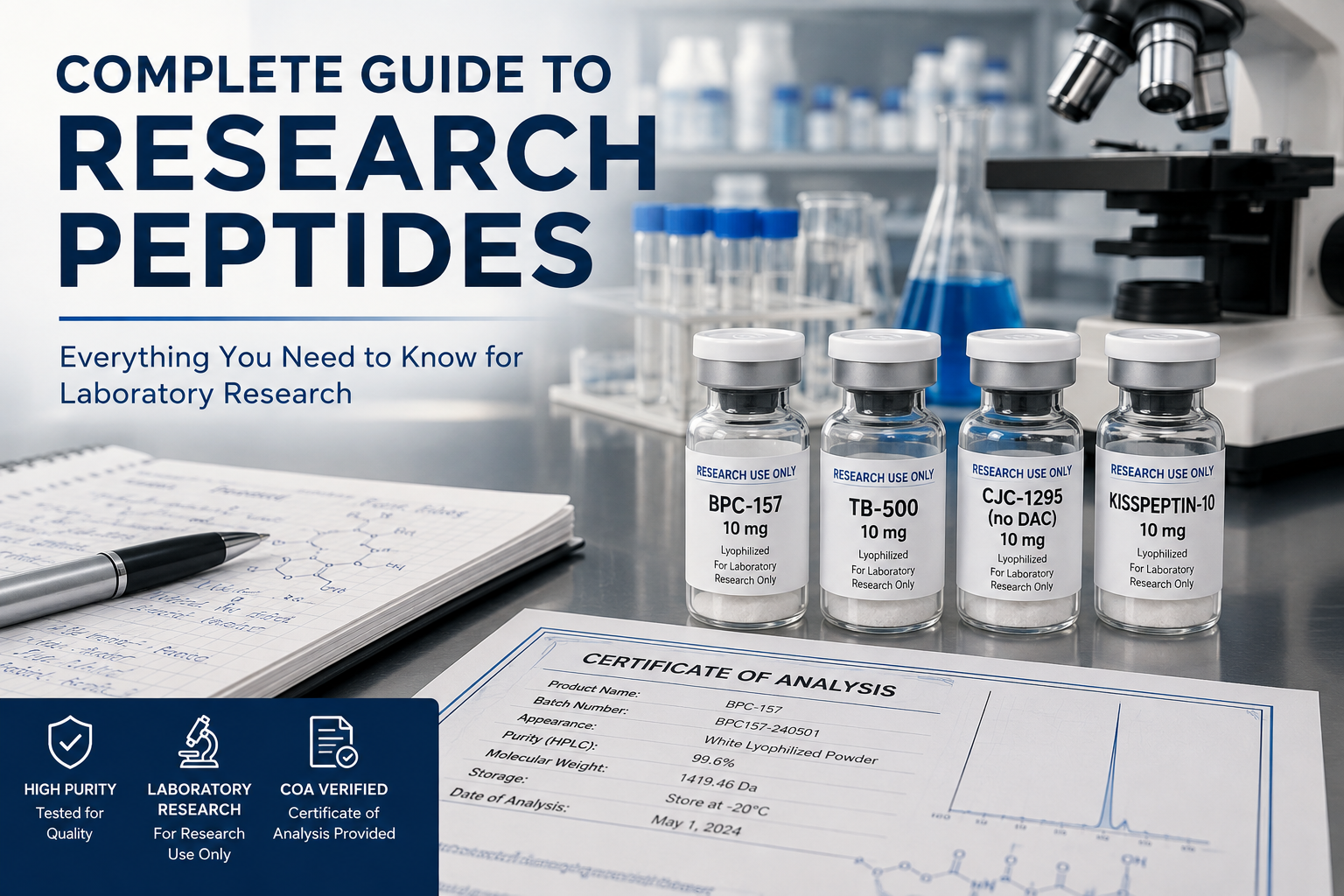
Complete Guide to Research Peptides
Read more: Complete Guide to Research PeptidesResearch peptides have become valuable tools in scientific and laboratory research. Their highly specific biological activity makes them useful for studying cellular signaling, metabolism, tissue repair, endocrine function, neuroscience, and many other fields of investigation. This guide explains what research peptides are, how they are manufactured, why laboratory verification matters, and how researchers can evaluate product quality. What Are Research Peptides? Peptides are short chains of amino acids that are naturally found throughout the human body and many other living organisms. They act as signaling molecules that influence countless biological processes. Research peptides are synthesized specifically for laboratory investigation and…
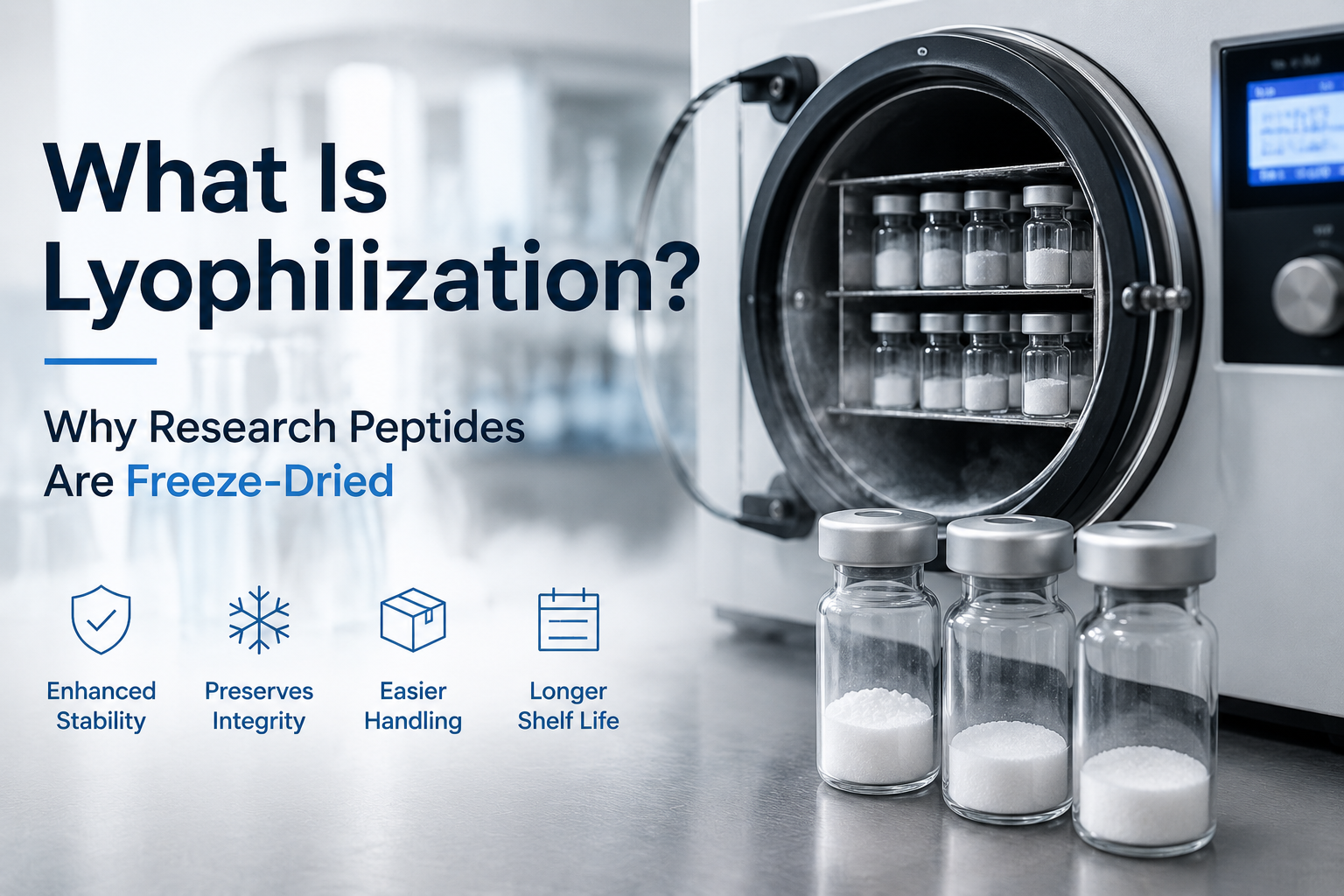
What Is Lyophilization? Why Research Peptides Are Freeze-Dried
Read more: What Is Lyophilization? Why Research Peptides Are Freeze-DriedMany research peptides are supplied as a dry, white powder rather than as a liquid solution. This is not simply a matter of convenience—it is the result of a specialized preservation process known as lyophilization, more commonly called freeze-drying. Lyophilization has become the preferred method for preparing many research materials because it improves stability, simplifies transportation, and helps preserve product integrity before reconstitution. Understanding why peptides are freeze-dried provides valuable insight into how these materials are prepared for laboratory use. What Is Lyophilization? Lyophilization is a dehydration process that removes water from a frozen material under carefully controlled conditions. Rather…

